If you are drawn to Montecito, you are probably not looking for just any neighborhood. You are looking for a setting that fits how you want to live, whether that means morning beach walks, easy access to coffee and errands, or a quieter home tucked into the hills. Understanding how Montecito changes from coast to foothills can help you narrow your search with more confidence. Let’s dive in.
Montecito Has More Than One Lifestyle
Montecito sits between the Pacific Ocean and the foothills of the Santa Ynez Mountains, and that geography shapes daily life in a very real way. Santa Barbara County describes the community as semi-rural, with narrow winding roads, limited sidewalks, extensive landscaping, and a strong emphasis on privacy, views, and neighborhood compatibility.
That means Montecito does not feel uniform from one area to the next. Some parts feel more casual and beach-oriented, some feel connected to shopping and everyday convenience, and others feel private, elevated, and estate-like.
Coastal Montecito Feels Relaxed And Direct
The south side of Montecito is its coastal edge, and this is where the lifestyle becomes most tied to the ocean. County planning documents note about three miles of coastline open to the public, with beach areas commonly described as Fernald Point, Miramar Beach, Hammond’s Meadow, and Channel Drive.
Public access points include Eucalyptus Lane, Posilipo Lane, Hammond’s Meadow, and Butterfly Beach. These shoreline areas are used for walking, jogging, picnicking, sunbathing, swimming, surfing, and intertidal study, which gives this part of Montecito an active but low-key rhythm.
What Daily Life Feels Like Near The Coast
If you picture stepping out for a beach walk instead of a hill drive, the coastal area may feel like the right fit. South of Highway 101 and along parts of the beach frontage, smaller lots and some beachfront homes are more common than in the interior and foothills.
The overall feel here is often more compact and casual than the hills. Ocean proximity, beach access, and convenience to resort-adjacent areas tend to shape the experience more than acreage or elevation.
Who May Prefer Coastal Montecito
This area can appeal to you if your priorities center on:
- Beach access and outdoor time
- A more immediate connection to the shoreline
- A less secluded, more day-to-day lifestyle feel
- Homes that trade land size for coastal location
If the ocean is the main amenity you want to enjoy often, coastal Montecito offers a distinct lifestyle advantage.
Village Areas Offer Everyday Convenience
In the middle of Montecito, the lifestyle shifts again. This area centers on the Village, which county planning documents identify as Montecito’s primary commercial center. Manning Park, the community’s only public park, is also located here.
For many buyers, this part of Montecito offers the easiest daily rhythm. You are closer to errands, dining, and local gathering spots while still being in a community known for its calm, low-key atmosphere.
The Main Hubs To Know
Current local guides point to three main shopping and dining hubs that help define everyday life in and around Montecito:
- Coast Village Road
- The Upper Village near San Ysidro Road and East Valley Road
- Montecito Country Mart
Coast Village Road is within Santa Barbara city limits, but it remains part of the broader Montecito lifestyle. County and local visitor sources describe it as a hub for restaurants, boutiques, banks, offices, grocery stores, gas stations, specialty shops, cafes, and a Friday farmers’ market.
Why Village Proximity Matters
If you want Montecito with less driving built into your day, village-adjacent streets may stand out. This area tends to be the best fit for buyers who value access to restaurants, markets, and basic services without giving up the community’s more relaxed setting.
There is also a layer of local history here. The East Valley and San Ysidro corridor grew from an older service intersection into today’s village shopping area, which helps explain why this part of Montecito still functions as a practical center of daily life.
Foothill Montecito Prioritizes Privacy And Views
As you move north of the village and into the hills, Montecito becomes more secluded. Santa Barbara County identifies a Mountain sub-area with mountainous terrain, slopes in excess of 40 percent, large areas of open space, and extremely limited public road access and services.
In practical terms, this is where Montecito takes on its most private and topography-driven identity. The homesites are often shaped more by land, elevation, and view orientation than by a walkable street pattern.
What Sets The Foothills Apart
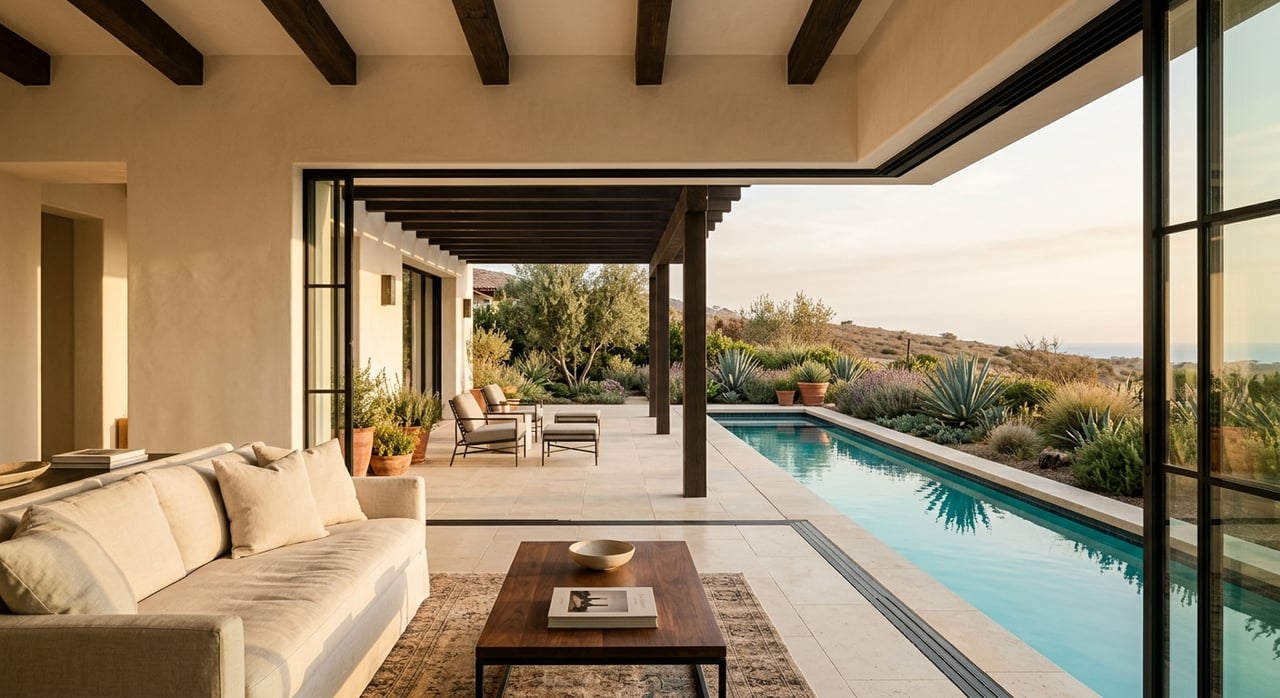
The foothill lifestyle is often defined by separation and scenery. Larger parcels, greater distance between homes, and more dramatic terrain all contribute to an estate-like feel.
The county also identifies scenic corridors including East Valley Road, Channel Drive, Olive Mill Road, and Mountain Drive. These roads frame views of estates and gardens, mountain backdrops, ocean vistas, and in some cases panoramas toward the Channel Islands.
The Tradeoff In The Hills
For many buyers, the main draw here is obvious: privacy. The landscape becomes the central amenity, and that can create a strong sense of retreat.
The tradeoff is that convenience generally drops as elevation rises. If your ideal home life includes quick access to shops or frequent walkable outings, the foothills may feel less practical than village-adjacent or coastal areas.
Montecito’s Character Is Shaped By Design
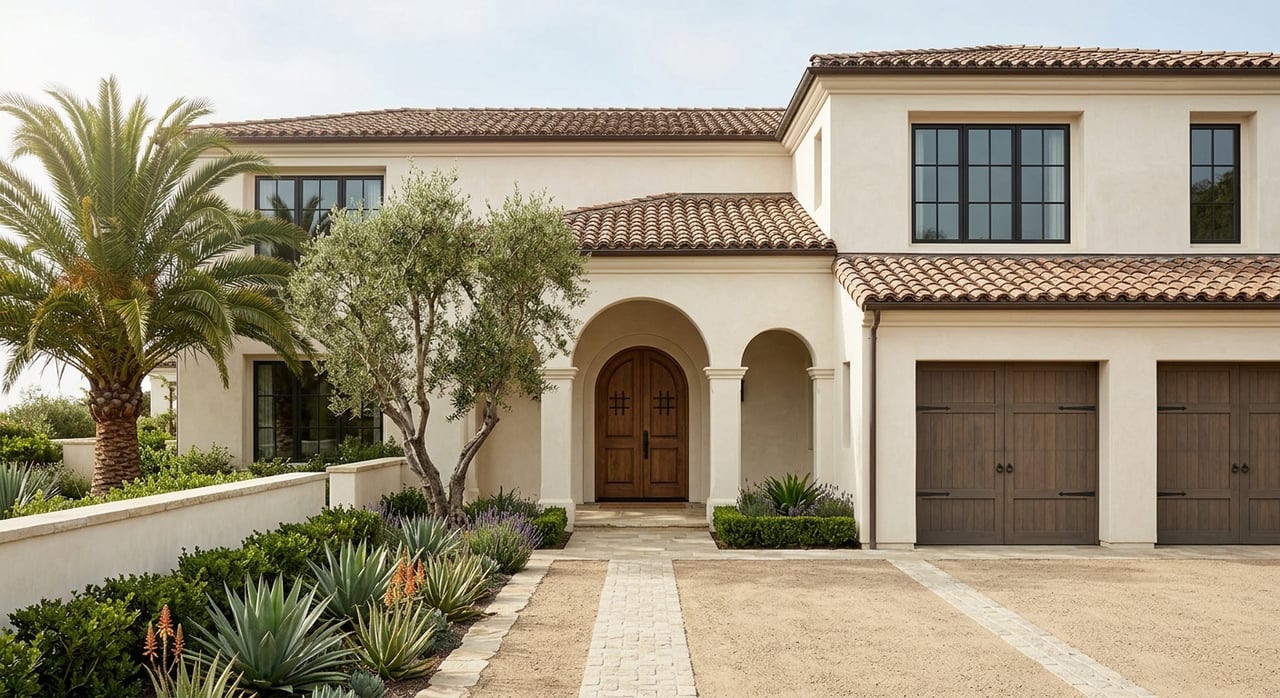
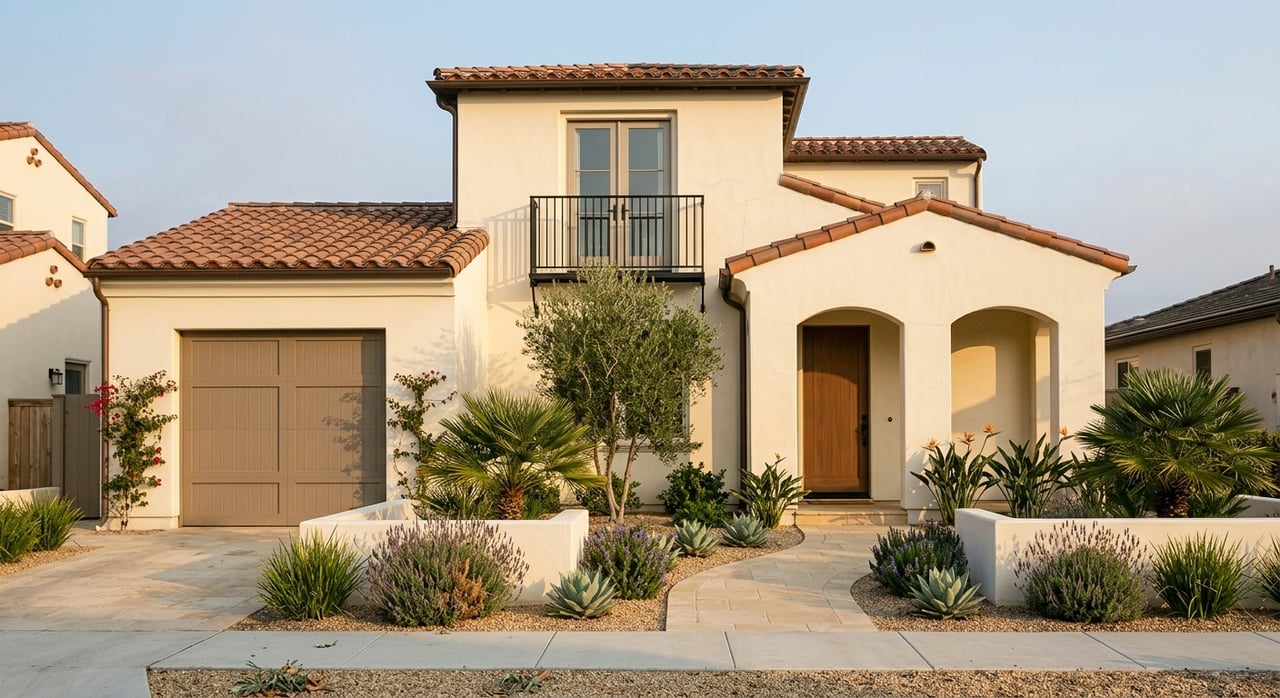
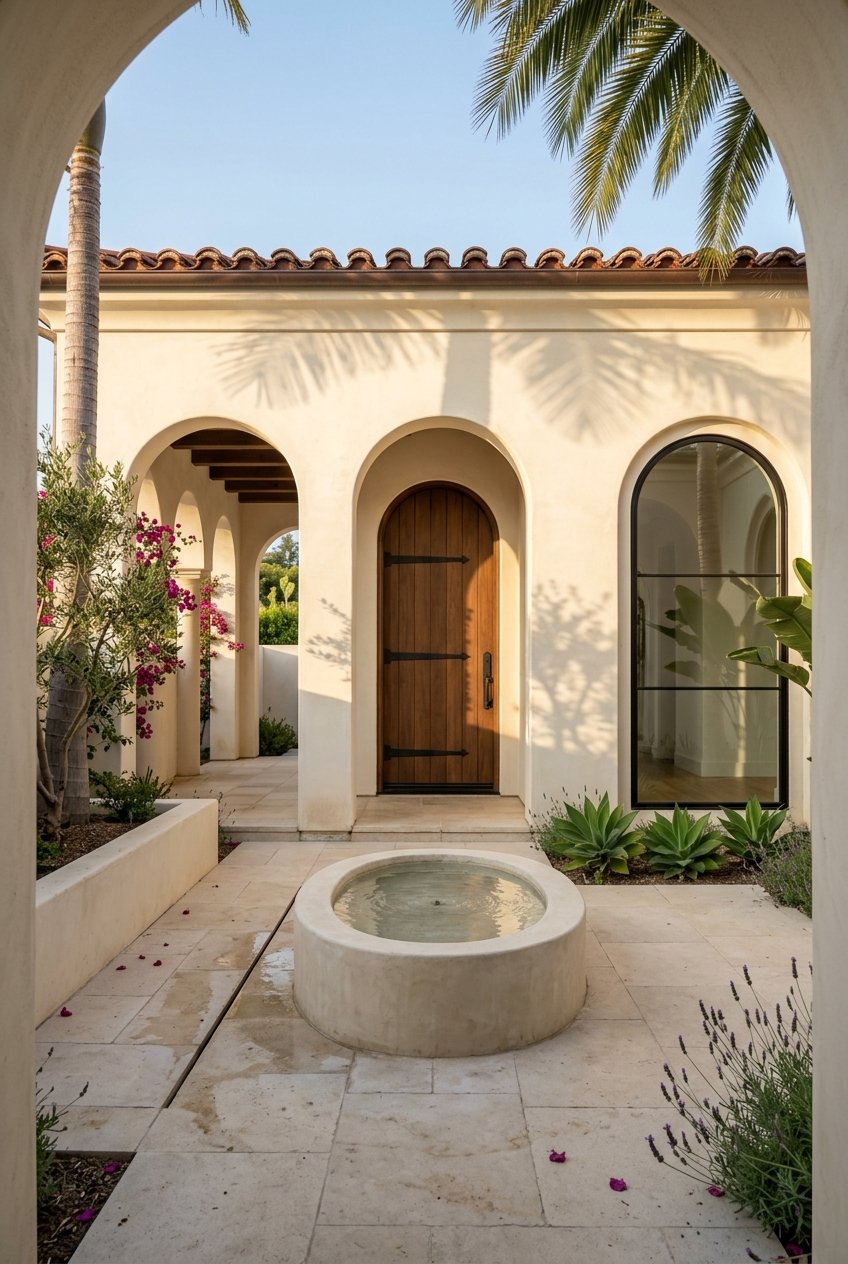
One reason Montecito feels so visually consistent, even across very different pockets, is that design and neighborhood character matter here. County architectural guidelines describe a community of hidden-from-view structures, extensive landscaping, and a mix of cottages, neighborhoods, and historic estates.
The same guidelines say projects should be harmonious with Montecito’s existing character, and the Montecito Board of Architectural Review is part of the process that helps evaluate that fit. For buyers and sellers, this helps explain why Montecito often feels carefully composed rather than heavily urban or overbuilt.
Historic Layers Still Matter
Montecito’s look did not appear overnight. Local history materials describe the community’s evolution from farms and orchards into a place known for summer cottages, estates, and later subdivision of some parcels.
That layered history is still visible today in the mix of large estates, smaller subdivided homes, and more modest residences. Landmarks such as Casa del Herrero, a historic house museum and garden reflecting Montecito in the 1920s and 1930s, reinforce that long-standing estate tradition.
How To Think About Neighborhood Fit
If you are comparing parts of Montecito, it helps to focus less on a single label and more on how you want your days to feel. The right area often comes down to what you want nearby, how much privacy you need, and whether you are more drawn to the ocean, the village, or the hills.
A simple way to think about it is this:
| Area | Lifestyle Focus | Common Tradeoff |
|---|---|---|
| Coastal Montecito | Beach access, ocean proximity, relaxed rhythm | Often less land and less privacy than the hills |
| Village-adjacent Montecito | Errands, dining, daily convenience | More activity than the most secluded areas |
| Foothill Montecito | Privacy, views, larger estates, separation | Less convenience as elevation rises |
A Smart Search Starts With Lifestyle
In Montecito, two homes can both be in the same community and still offer very different day-to-day experiences. That is why a smart search usually starts with lifestyle, not just square footage or price point.
If you know you want beach mornings, quick trips to local shops, or a more private setting with long views, you can search with much more clarity. That kind of neighborhood fit matters just as much as the home itself.
Whether you are buying your first place on the South Coast, moving into a luxury property, or preparing to sell in a highly location-driven market, local guidance can make the process feel much more straightforward. If you want help understanding where your goals fit best in Montecito, connect with Tiffany Charbonneau.
FAQs
What is the main difference between coastal and foothill Montecito?
- Coastal Montecito is more connected to beach access and ocean-oriented daily life, while foothill Montecito is more defined by privacy, larger parcels, elevation, and long views.
What part of Montecito is best for daily convenience?
- Village-adjacent areas are generally the most convenient for errands, dining, and everyday services because they are closest to hubs like the Upper Village, Coast Village Road, and Montecito Country Mart.
Does Montecito have public beach access?
- Yes. County planning documents note public access along Montecito’s coastline, including access points at Eucalyptus Lane, Posilipo Lane, Hammond’s Meadow, and Butterfly Beach.
Why does Montecito feel so private and landscaped?
- County planning and architectural guidelines emphasize privacy, extensive landscaping, neighborhood compatibility, and structures that are often screened from view, all of which shape the community’s character.
Is Montecito mostly estates, or are there smaller homes too?
- Montecito includes a mix of historic large estates, smaller subdivided homes, cottages, and more modest residences, according to local planning and history materials.
What should buyers focus on when choosing a Montecito neighborhood?
- A helpful starting point is to decide whether your top priority is beach access, village convenience, or privacy and views in the hills, since those lifestyle differences shape the experience of each area.